

DIY Furnace Care: A Practical Checklist and Homeowner’s Guide
Keeping your furnace well maintained keeps your home safe, comfortable, and less expensive to heat. This guide focuses on practical DIY furnace tasks you can do with common tools. You’ll learn why regular homeowner maintenance matters, how to prepare safely, step‑by‑step instructions for filters, blowers, burners, thermostats, vents, and lubrication, and clear signs that mean it’s time to call a pro. We also outline likely savings from routine upkeep and explain how an annual professional tune‑up complements homeowner care to protect efficiency and safety. Precise Air Systems is listed as a local Los Angeles resource for estimates or scheduling when a job exceeds DIY scope. Read on for seasonal checklists, concise how‑tos, safety steps, and quick reference tables tailored to Los Angeles homes and climate considerations.
Why regular DIY furnace maintenance matters
Simple homeowner maintenance keeps your furnace running efficiently, lowers the chance of breakdowns, and improves indoor air quality by addressing common performance limits. Small actions—changing filters, light cleaning, visual checks, and thermostat verification—reduce airflow restrictions and combustion inefficiencies that raise energy use. These tasks also cut wear on parts like the blower motor and burners, helping your furnace last longer and avoid surprise repairs. Below we break benefits into clear points, suggested timing, and a quick reference table.
Home furnace care delivers real, measurable value:
- Lower energy use: Clean filters and proper airflow commonly improve efficiency by 5–15%.
- Longer equipment life: Routine cleaning and minor upkeep prevent accelerated wear on fans and burners.
- Better indoor air quality: Removing dust and replacing filters reduces allergens and particulates.
- Improved safety: Regular visual checks help spot combustion or venting issues early.
The table below summarizes key maintenance items, suggested frequency, and the main benefit of each action.
Different maintenance tasks offer distinct benefits and recommended timing for homeowners.
| Component | Recommended Frequency | Primary Benefit |
|---|---|---|
| Air filter | Every 1–3 months | Restores airflow; lowers energy use and dust |
| Visual burner check | Annually (DIY inspection) | Finds soot, uneven flames, and safety risks |
| Blower cleaning (basic) | Annually or as needed | Improves circulation; reduces motor strain |
| Thermostat check | Before heating season | Ensures accurate setpoints and efficient cycles |
This quick guide helps you prioritize straightforward actions that prevent bigger problems and supports seasonal planning.
What homeowners gain from regular furnace care
Regular attention to your furnace boosts safety, lowers operating costs, and keeps heating consistent across the home. For example, replacing a clogged filter restores airflow so the blower doesn’t overwork—saving energy and reducing motor wear. Routine cleaning removes dust and particulates, improving air quality for homes with pets or allergy concerns. Knowing these benefits makes it easier to commit to regular upkeep and recognize when to escalate an issue to a professional.
Consistent maintenance also means fewer surprise repairs and steadier performance through seasonal temperature changes. That leads to the practical question: how often should each task be done?
How often to perform furnace maintenance
Timing matters: simple tasks need regular attention, while deeper inspections can be seasonal or yearly depending on usage, pets, and air‑quality needs. Check or replace the air filter every 1–3 months, inspect vents and registers seasonally, do basic blower and burner checks annually, and schedule a professional inspection each year to examine heat exchangers and combustion safety. If you have pets, smokers, or severe allergies, shorten filter intervals and increase visual checks.
A short maintenance frequency checklist:
- Filter: 1–3 months
- Vents/registers: Seasonally
- Blower/basic cleaning: Annually
- Professional inspection: Annually
These intervals balance homeowner effort and safety, and set you up for the step‑by‑step procedures that follow.
How to prepare safely for DIY furnace maintenance
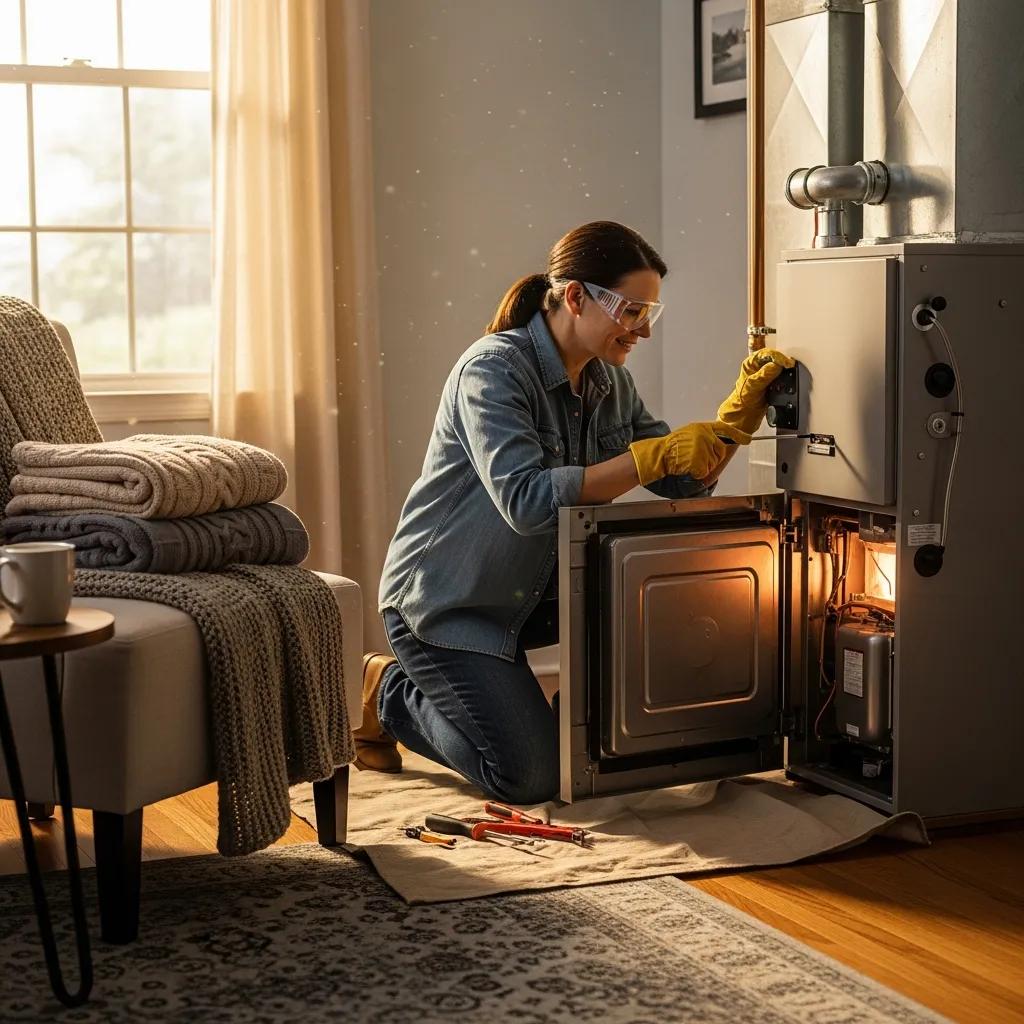
Preparation focuses on safety, isolating the system, and having the right tools so work is effective and risks are minimized. Before you start, follow the furnace manufacturer’s instructions, turn off power at the service switch or breaker, and if you’ll access combustion parts, confirm gas controls and be ready to shut off gas if you smell it. Basic protective gear—gloves, eye protection, and a dust mask—reduces exposure to dust and helps you handle parts safely.
Gathering tools and clearing the workspace saves time and reduces risk. The next section lists concrete safety steps to follow before you begin.
Safety steps to follow before you start
Put life‑safety first: shut off electrical power at the breaker, set the furnace to “off,” and close the gas valve if the procedure involves burners or combustion access. Test carbon monoxide detectors before and after any maintenance that touches ignition components, and ensure good ventilation. Wear gloves and eye protection, avoid loose clothing near moving parts, and never work on sealed or pressurized components. If you smell gas, evacuate immediately and call a professional.
Step‑by‑step DIY furnace maintenance tasks
Below are clear, actionable steps for homeowner‑friendly tasks: filter replacement, blower cleaning, burner and flame sensor care, thermostat checks, vent and duct inspection, and lubrication where applicable. Each procedure emphasizes safe access, gentle cleaning, signs that mean you should stop, and when to call a technician. Use the checklist table to match tasks to tools and timing.
The table below maps common DIY tasks to the tools you’ll need and the suggested time and frequency so you can plan a seasonal routine.
Quick task checklist with tools and timing:
| Task | Tools / Supplies | Time & Frequency |
|---|---|---|
| Filter replacement | Replacement filter, gloves | 10–15 minutes; every 1–3 months |
| Blower cleaning (basic) | Vacuum with brush, soft brush | 30–60 minutes; annually |
| Burner inspection | Flashlight, cloth | 15–30 minutes; annually |
| Flame sensor cleaning | 400-600 grit cloth, screwdriver | 15 minutes; as needed (misfires) |
| Thermostat calibration | Thermometer, fresh batteries | 10–20 minutes; seasonally |
| Vent/register inspection | Flashlight, vacuum | 20–30 minutes; seasonally |
Use this table to decide which tasks to schedule and how to prepare.
How to change your furnace filter: types and steps
The air filter controls particulates and airflow—replacing it restores circulation and reduces blower strain. Find the filter slot or check your manual for size, note the airflow arrow on the frame, and remove the old filter carefully to avoid releasing dust. Install the correct replacement with the arrow aligned to airflow, secure the access panel, and reset any filter‑change reminders on your thermostat or system.
Filter tips to avoid mistakes:
- Choose pleated filters with the appropriate MERV rating for your household.
- Avoid overly restrictive high‑MERV filters if your system wasn’t designed for them (typically MERV 8–13 for residential units).
- Seal used filters in a bag before disposal to contain dust.
After changing filters, consider a basic blower cleaning to keep airflow steady—covered next.
How to clean the blower and motor
Cleaning the blower improves airflow and reduces motor stress—take care not to damage fan blades or wiring. Turn off power at the breaker and remove the blower access panel. Use a low‑suction vacuum and a soft brush to remove dust from blades and housing; don’t bend blades or use metal tools that could nick surfaces. Visually inspect bearings and wiring for wear, then reassemble panels securely before restoring power.
If the motor has oil ports and the manual allows it, add a few drops of the manufacturer‑recommended oil; sealed motors should not be lubricated. After blower care, move on to burners and the flame sensor, which need delicate handling.
How to inspect and clean burners and flame sensors
Inspect burners for sooting, corrosion, or uneven flames—these can indicate combustion issues. With power off and gas precautions in place, gently remove loose debris with a soft brush. Clean the flame sensor lightly with a fine abrasive cloth (not sandpaper) to remove film buildup. Reassemble and test ignition. If flames are yellow or soot remains, stop and call a professional.
These steps often fix nuisance shutdowns and improve ignition reliability, then you can move on to thermostat tuning.
How to test and calibrate your thermostat
Calibration makes sure the thermostat matches actual room temperature and prevents wasted cycling. Place a reliable thermometer near the thermostat, compare readings, replace batteries if needed, and follow the thermostat manual to adjust calibration so setpoints align with measured temperature. For programmable or smart thermostats, use conservative schedules that avoid large setbacks during occupied hours to balance comfort and savings.
If your thermostat lacks scheduling features, consider an upgrade to improve control and prepare for vent and duct checks next.
How to check vents and ducts for blockages and airflow
Start at registers and grilles: remove them, vacuum visible dust, and inspect accessible ducts for obstructions or big gaps. Do a room‑by‑room airflow check by measuring temperature change at vents with the furnace running—weak airflow in one room usually means closed dampers, blocked ducts, or balancing issues. Small blockages near registers are often homeowner‑fixable; widespread duct leakage, contamination, or insulation problems should be handled by a pro.
Persistent airflow imbalance typically requires sealing or professional duct work for the best long‑term improvement.
How to keep your furnace safe and efficient while you work
Safety and efficiency go hand in hand: test carbon monoxide detectors, inspect for cracks or corrosion, and listen for unusual noises to protect occupants and system performance. Prioritize detector functionality, check venting and flue paths for obstructions, and watch for smoke or odd odors after service. If you see persistent gas smells, heavy soot, or irregular combustion, shut the system down and contact a qualified technician.
Short safety checklist for homeowners:
- Test CO detectors monthly and replace batteries as needed.
- Look for visible cracks or corrosion in accessible flues.
- Listen for unusual noises or odd cycling during initial run.
These checks reduce immediate risk and lead into why CO detector testing is so important.
Why carbon monoxide detector testing matters
Carbon monoxide is odorless and can build up from incomplete combustion; working CO detectors are your first line of defense. Test detectors monthly, swap batteries per the manufacturer, and replace units according to age guidelines (typically every 5–7 years). Place detectors near sleeping areas and on every floor. If an alarm sounds, evacuate, call emergency services, and don’t re‑enter until it’s safe—safety comes before troubleshooting.
Keeping CO safety top of mind helps you recognize when DIY steps aren’t enough and a professional evaluation is required.
Common safety checks homeowners can do
Do these accessible checks: verify vents and flues are free of debris, keep the area around the furnace clear of combustibles, listen for rattles or banging, and sniff for gas odors that need immediate action. Check pilot lights or electronic ignition for a steady blue flame and inspect visible components for soot or discoloration. If you encounter any of these red flags, stop work and call a trained technician.
These baseline checks help you decide when professional help is needed.
When to call a professional for furnace maintenance or repair
Some problems clearly exceed DIY limits and need trained HVAC technicians: gas smells, persistent yellow flames, visible heat‑exchanger cracks, frequent short‑cycling, or burning electrical odors. Professionals provide in‑depth inspections—heat exchanger checks, combustion analysis, and safe handling of gas and electrical systems—that homeowners can’t perform safely. Annual professional tune‑ups are recommended to catch issues early and verify safety‑critical components you can’t test at home.
Below are common red flags that require expert repair and the benefits of an annual professional tune‑up.
Benefits of an annual professional tune‑up
A professional tune‑up includes thorough inspection and cleaning of heat exchangers, burners, ignition systems, electrical connections, and airflow components. Technicians run safety checks that protect occupants and help maintain warranty compliance when applicable. They catch small issues—loose wiring, worn parts, early corrosion—before they become costly, and they optimize combustion and airflow for seasonal efficiency. The result is a safer, more reliable system that typically runs more economically over its life.
If you want local support in Los Angeles, here’s how Precise Air Systems can help.
How Precise Air Systems supports Los Angeles homeowners
Precise Air Systems offers local HVAC services tailored to Los Angeles homes and specializes in Lennox equipment. They provide convenient scheduling and free online estimates to make it easy to move from DIY care to professional service when needed. Services include heating repair, installation, tune‑ups, and general HVAC maintenance, plus resources like a blog and FAQs to prepare homeowners. If you prefer a hybrid approach—regular DIY upkeep with professional validation—Precise Air can schedule inspections and give targeted recommendations based on what you find.
This local option complements homeowner routines and ties into how DIY maintenance produces measurable savings.
How DIY furnace maintenance saves money and boosts efficiency
DIY care cuts energy waste mainly by restoring proper airflow and keeping controls accurate. Regular filter changes, basic blower cleaning, and thermostat tuning reduce run time and prevent inefficient cycling. Conservatively, consistent filter and airflow maintenance often yields 5–15% improvements, with added gains when thermostats are programmed well and vents are balanced. Pairing routine DIY actions with an annual professional tune‑up maximizes ROI—low‑cost frequent upkeep plus periodic expert optimization and safety checks.
The table below links homeowner actions to how they save energy and gives conservative impact estimates so you can prioritize the highest‑value steps.
Practical actions, their mechanisms, and conservative impact estimates:
| Action | Mechanism | Estimated Impact |
|---|---|---|
| Filter replacement | Restores designed airflow | ~5–10% improved efficiency |
| Blower cleaning | Reduces motor strain and improves airflow | ~3–7% efficiency gain |
| Thermostat calibration | Reduces unnecessary cycling | ~2–5% efficiency gain |
| Duct/register cleaning & sealing | Lowers distribution losses | Varies; noticeable in leaky systems |
This table helps you see which DIY steps most directly cut energy use and plan your maintenance budget.
How much you can save on utility bills with regular maintenance
Savings depend on climate, furnace age, insulation, and how you use heat. In Los Angeles’s mild climate, consistent maintenance trims wasted runtime during cold snaps and off‑season use, producing percentage improvements rather than dramatic bill drops. Using conservative industry ranges, homeowners who keep filters fresh, maintain the blower, and calibrate thermostats can expect single‑digit to low‑teen percentage savings on heating‑related energy. Those savings add up over time and help extend equipment life.
Estimating likely savings helps you decide which tasks to prioritize and whether to invest in professional tune‑ups to boost results.
DIY maintenance vs. professional services: cost comparison
DIY maintenance offers low‑cost, immediate value—replacement filters and basic cleaning tools deliver frequent savings. Professional services add comprehensive inspection, safety validation, and deep cleaning that go beyond DIY scope. The best value is a hybrid approach: regular homeowner upkeep plus an annual professional tune‑up. That combination captures ongoing small savings at low cost while preserving reliability with periodic expert attention. When safety, combustion performance, or warranty compliance are at stake, professional service provides outcomes homeowners can’t replicate safely.
For convenience, Precise Air Systems offers scheduling and free estimates to Los Angeles homeowners who want a professional complement to their DIY program.
Conclusion
Regular DIY furnace maintenance improves safety, comfort, and efficiency while helping you avoid unexpected repairs. Follow the schedules and steps in this guide to keep your system running well and extend its life. When tasks exceed DIY scope, reach out to local professionals like Precise Air Systems for expert help. Start today for a safer, more efficient home heating system.