
Common Furnace Issues and Solutions: How to Diagnose and Fix Furnace Problems
A furnace failure interrupts comfort and can create safety risks if ignored. This practical guide helps homeowners recognize common furnace problems, run safe troubleshooting checks, and apply basic fixes for issues such as no heat, cold air, odd noises, pilot/ignitor failures, and short cycling. You’ll find clear, step-by-step checks for filters, thermostats, ignition components, and airflow, plus guidance on when to call a professional. The article is organized into six focused sections—why furnaces stop heating, diagnosing noisy units, cold-air causes, pilot light and ignitor problems, short cycling causes and prevention, and when to schedule professional repair in Los Angeles—using straightforward HVAC terms so you can quickly decide whether a DIY fix or a service visit is appropriate.
Why Is My Furnace Not Heating? Common Causes and Fixes
If your furnace runs but won’t warm the house, the problem usually comes from a break in combustion, restricted airflow, or a lost control signal. Typical causes include clogged air filters, thermostat mistakes, ignition or pilot failures, power interruptions, or gas supply issues. Knowing the basic mechanisms—restricted airflow limits heat transfer, while ignition faults stop burners from producing heat—helps you prioritize safe checks. Start with quick inspections that often fix the issue: confirm thermostat settings, check and replace the air filter, make sure the furnace has power, and inspect the breaker. Those steps protect safety and restore heat in many cases; persistent or dangerous symptoms mean it’s time for a professional diagnosis.
What Are the Symptoms of a Furnace Not Heating?
Common signs a furnace isn’t producing heat include cool air from vents, some rooms staying cold while others warm, the furnace running without raising the home temperature, or long run times with little output. You might also notice unusual smells during operation or abnormal flame appearance where you can view it. Verify the issue by feeling vent temperature, checking thermostat mode and setpoint, and noting whether the blower runs. Those observations narrow the likely causes and point to the next steps—airflow checks, thermostat verification, and ignition inspection.
How Do Dirty Air Filters and Thermostat Malfunctions Cause No Heat?
Dirty filters restrict airflow, which reduces heat transfer and can trip the furnace’s limit switch—shutting burners off while the blower may still run. Thermostat problems—from wrong mode and dead batteries to misprogrammed smart schedules—interrupt the call-for-heat signal so the furnace won’t fire. Replace clogged filters and confirm thermostat mode, power, and basic wiring before moving to combustion components. If a new filter and a thermostat reset don’t restore heat, the issue is likely with the ignitor, pilot, or gas supply and should be handled by a trained technician.
Below is a quick-reference table that links common causes to symptoms and safe homeowner actions.
| Cause | Typical Symptom | Immediate Homeowner Action |
|---|---|---|
| Dirty air filter | Furnace runs but vents blow cool air; noticeably reduced airflow | Replace the filter, restart the system, and watch for heat return |
| Thermostat error | No call for heat or incorrect mode displayed | Check mode and setpoint, replace batteries, and power-cycle the thermostat |
| Ignitor/pilot failure | Clicking with no flame or repeated ignition attempts | Turn off power and gas; don’t attempt ignitor repairs yourself—call a pro if it continues |
| Power or breaker trip | Furnace unresponsive or blower runs intermittently | Check the furnace switch and breaker; reset only if safe, then observe |
| Gas supply issue | Furnace tries to ignite then shuts down | Do not attempt gas repairs; evacuate if you smell gas and call professional service |
Use this table to decide which DIY checks are reasonable and which symptoms need a trained technician’s attention.
How Can I Troubleshoot a Noisy Furnace? Causes and Solutions
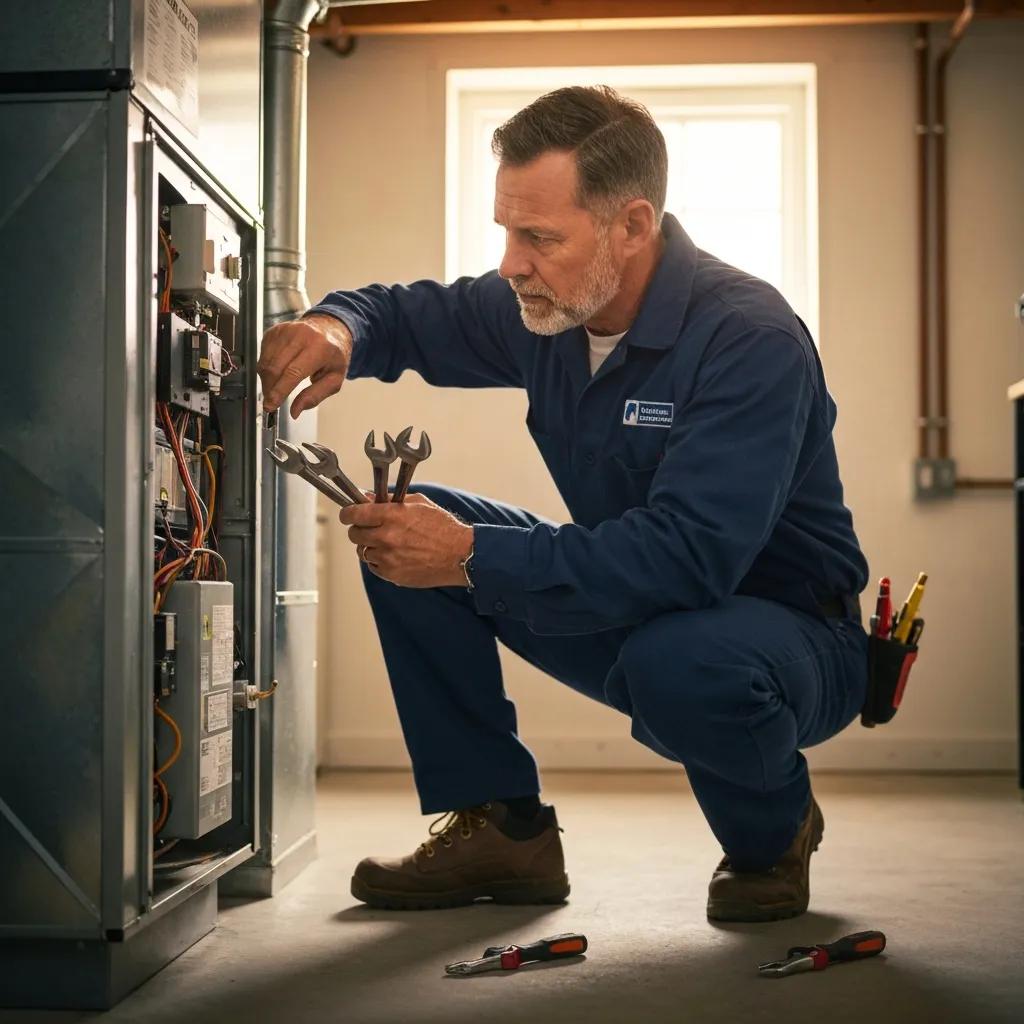
Unusual furnace noise usually points to mechanical wear, loose parts, or combustion issues. Identifying the sound helps locate the problem: motor bearing wear causes squeals, delayed ignition produces bangs, and loose panels or ducts create rattles. Start with safe steps—turn off power, inspect accessible panels and fasteners, and check the filter—then restart to see if the noise returns. Basic checks can rule out false alarms, but grinding, burning smells, or persistent bangs are signs to schedule professional repair.
What Types of Noises Indicate Furnace Problems?
Typical noise patterns and likely causes:
- Banging/boom → Often delayed ignition or sudden combustion; note timing and startup behavior.
- Squealing → Usually worn motor bearings or slipping belts; inspect blower motor and belts with power off.
- Rattling → Loose panels, duct straps, or debris in the blower; tighten fasteners and clear any obstructions.
These mappings guide a safe initial inspection: power-off visual checks and a filter change first. If you still hear grinding, smell burning, or experience loud ignition bangs, shut the system down and schedule a professional diagnosis for mechanical or combustion faults.
When Should I Call a Professional for Noisy Furnace Repair?
Call a technician when noises suggest internal component failure or combustion problems that affect safety or reliability. Red flags include metal-on-metal grinding (possible motor failure), burning odors (electrical overheating), squealing that continues after filter changes, or loud ignition bangs. A pro will run systematic checks—bearing tests, motor assessments, ignition and gas-pressure diagnostics, and combustion analysis—to identify failing parts and recommend repair or replacement. If you’re in the Los Angeles area, local technicians can usually provide prompt, targeted diagnostics and repairs.
What Causes a Furnace to Blow Cold Air and How Can I Fix It?
Cold air from the furnace means combustion heat isn’t reaching the airstream. Causes include ignition or pilot failures, thermostat or control errors, airflow restrictions, or safety shutdowns from a cracked heat exchanger. Ignition faults prevent burners from lighting; airflow limits mean only ambient air moves through the ducts. Start with safe checks—confirm thermostat mode and setpoint, replace the filter, verify power, and observe ignition behavior. If the furnace clicks but never lights, stop and call a licensed technician for combustion-system inspection.
How Do Ignition and Pilot Light Issues Lead to Cold Air?
Ignitors and pilot assemblies start burner operation. On electronic ignition systems a cracked or worn ignitor won’t spark; on pilot-lit systems a failing thermocouple or weak pilot flame will stop gas flow. Signs include clicking without flame, a visible pilot outage, or repeated ignition attempts ending in lockout. Homeowners may safely observe a visible pilot (if accessible) and listen for ignition attempts, but should not tamper with gas components. Persistent ignition symptoms after checking the thermostat and power require an HVAC technician to inspect ignitors, thermocouples, and gas valves.
What DIY Steps Can I Take Before Calling an HVAC Technician?
Try this short, safe checklist to rule out common easy fixes before booking service:
- Check the thermostat: Ensure it’s set to “Heat” and the setpoint is higher than the room temperature.
- Replace the air filter: A fresh filter restores airflow and prevents limit-switch trips.
- Reset power: Turn the furnace power off and on or reset the breaker, then observe the startup sequence.
- Note error codes: Many furnaces flash diagnostic codes on an LED—record any patterns to share with the technician.
These steps help you tell whether the issue is a simple filter/thermostat/power problem or something that requires professional attention to ignition or gas systems.
How Do Furnace Pilot Light Problems Affect Heating Performance?
Pilot light or ignitor failures stop burners from operating, reducing or eliminating heat and often causing repeated lockouts. They also carry safety concerns if gas flow isn’t controlled properly. Older units may suffer thermocouple failures that prevent the pilot from staying lit; modern systems depend on electronic ignitors that can wear out or fail electrically. Look for a pilot that won’t stay lit, a weak or yellow flame, or diagnostic codes showing ignition faults. Fixing pilot issues quickly restores reliable heating and prevents secondary problems like short cycling or undue wear on the blower.
What Are Common Pilot Light Issues and Their Symptoms?
Common pilot issues include an extinguished pilot, clogged pilot orifice causing a weak flame, thermocouple wear that can’t sense flame, and intermittent gas supply. Indications are a pilot that won’t hold, a yellow or unstable flame, or repeated failed ignition attempts. If you smell gas, turn off the furnace, ventilate the area, and avoid relighting the pilot until it’s safe. After basic safety checks, schedule professional repair if pilot or thermocouple faults are likely.
How Does Precise Air Systems Repair Pilot Light Problems?
When we repair pilot or ignitor issues, our technicians follow a controlled diagnostic process: verify gas pressure and valve operation, test thermocouples or ignitors for continuity, clean or replace clogged pilot orifices, and confirm safe ignition under load. Precise Air Systems uses this workflow to address root causes and restore safe operation. As a local Lennox dealer serving Los Angeles neighborhoods, we back installation work with a six-month service guarantee and offer free online estimates so homeowners can plan repairs. If a pilot issue persists after safe DIY checks, our technicians can perform the necessary inspections and repairs.
What Is Furnace Short Cycling and How Can It Be Resolved?
Short cycling is when a furnace turns on and off repeatedly in short bursts. That behavior lowers efficiency and increases wear. Causes include an oversized unit, poor thermostat placement, restricted airflow from dirty filters, limit-switch trips, or failing controls. Typically the system reaches a safety or temperature limit quickly—then shuts down until it resets. Fixing short cycling means identifying the root cause and correcting installation or maintenance faults. Regular maintenance and proper system sizing prevent short cycling and restore steady, efficient operation.
What Causes Furnace Short Cycling?
Short cycling can come from mechanical and installation issues: an oversized furnace that heats the house too fast, a thermostat near a heat source giving false readings, blocked return vents and dirty filters restricting airflow, or faulty limit switches and control boards misreading temperatures. Look for frequent on/off cycles, uneven room temperatures, and rising energy use. Simple homeowner checks are replacing the filter, opening vents, and moving thermostat sensors if possible. If cycling continues after these steps, a professional should evaluate system sizing, controls, and duct balance.
| Issue | Likely Cause | Recommended Action |
|---|---|---|
| Rapid cycles after filter change | Airflow restriction or thermostat placement | Replace the filter, check vents and thermostat location, and monitor performance |
| Short cycles with uneven heating | Oversized unit or duct imbalance | Contact a professional for a load calculation and duct balancing |
| Repeated lockouts | Faulty limit switch or control board | Schedule a technician to test and replace controls as needed |
How Can Regular Maintenance Prevent Short Cycling?
Regular maintenance keeps airflow clear, controls calibrated, and combustion efficient—preventing short cycling. Key tasks include replacing filters on schedule, cleaning and inspecting blower components, and verifying thermostat calibration. Routine inspections catch early wear on ignitors, motors, and limit switches before they cause cycling. Homeowners who follow a seasonal maintenance plan reduce repair costs, extend equipment life, and maintain consistent heating. Maintenance also helps preserve manufacturer warranties.
Frequently Asked Questions
What should I do if my furnace is making unusual noises?
Identify the sound first—banging, squealing, and rattling point to different issues. Banging can mean delayed ignition, squealing often indicates motor or belt wear, and rattling may be loose panels or ductwork. Power off the furnace and inspect accessible components. If the noise continues after basic checks, call a professional for a full inspection and repair.
How can I tell if my furnace is oversized for my home?
An oversized furnace tends to short cycle, causing rapid temperature swings, uneven heating, and higher energy bills. To confirm sizing, have a professional perform a load calculation based on your home’s square footage, insulation, and climate. That assessment will determine whether your system’s capacity matches your needs.
What are the risks of ignoring furnace maintenance?
Skipping maintenance can reduce efficiency, raise energy bills, and create safety risks. Problems like gas leaks, carbon monoxide buildup, or mechanical failures become more likely without regular inspections. Annual service helps catch issues early, keeps the system safe, and extends its useful life.
How can I improve my furnace's energy efficiency?
Improve efficiency by replacing air filters regularly, using a programmable or smart thermostat to manage schedules, sealing ductwork leaks, and improving home insulation. Regular maintenance also uncovers inefficiencies and keeps the system running at peak performance—saving energy and lowering costs.
What should I do if I smell gas near my furnace?
If you smell gas, act immediately: evacuate everyone, avoid using electrical switches or open flames, and call your gas company or emergency services from a safe location. Do not try to locate or fix the leak yourself—gas leaks are dangerous and require professional response.
Conclusion
Knowing common furnace problems and safe troubleshooting steps helps you protect comfort and safety at home. Follow the checks in this guide to identify simple fixes and to know when to call a technician. In the Los Angeles area, Precise Air Systems offers experienced furnace repair and maintenance to get your system running safely and efficiently—contact us to schedule a consultation or request a free online estimate.